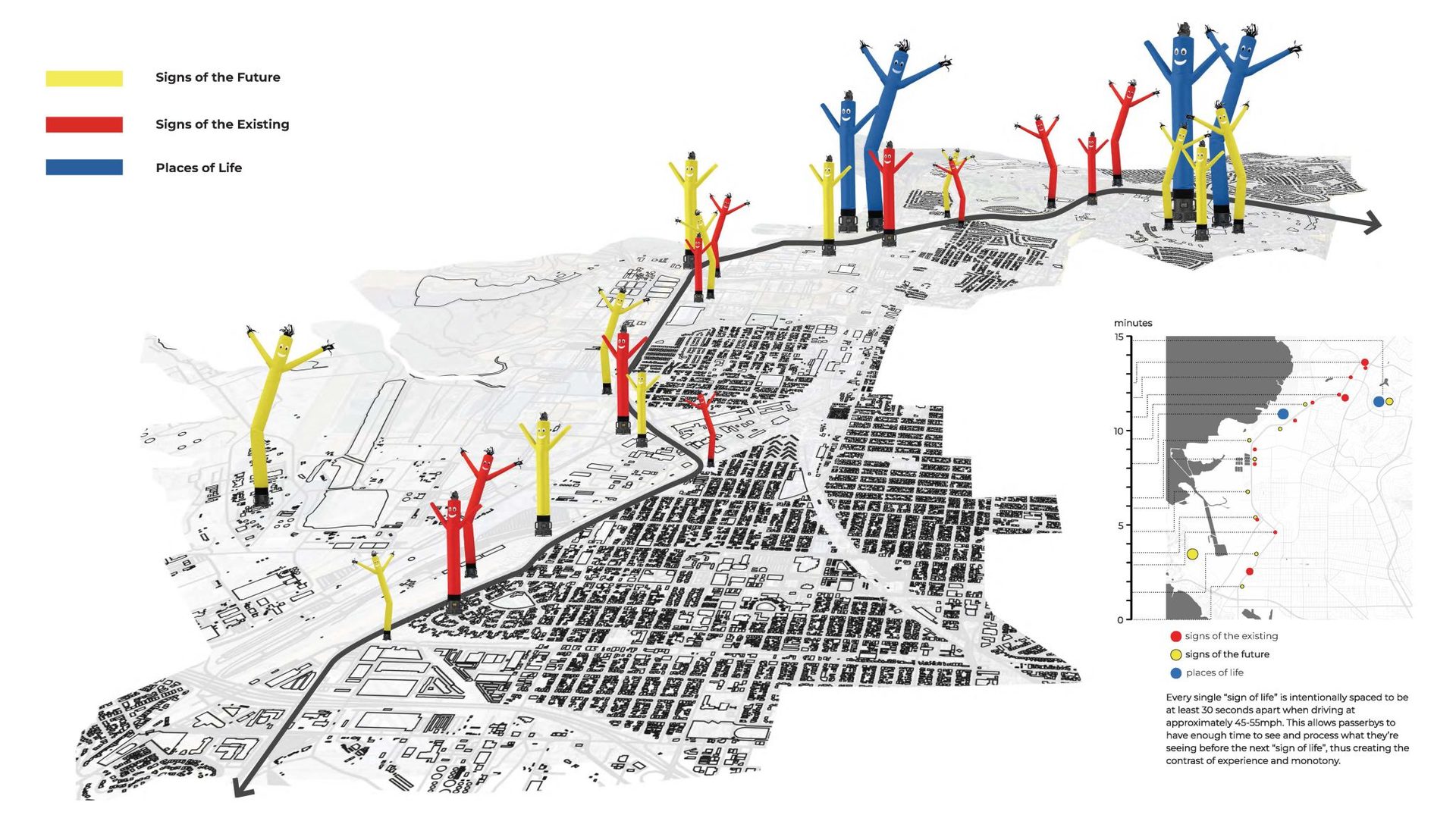
Parkway Placemaking Strategy · Existing · Future · Places of Life
A speculative placemaking strategy for the Richmond Parkway, reimagining an infrastructure of pure throughput as a place of human connection.
Our journey began with a simple question: how can an infrastructure of pure throughput be reimagined as a place of human connection?
The Richmond Parkway, like so much urban infrastructure, was designed to connect commodities, not communities, creating a placeless feeling. Yet we discovered small, unnoticed “signs of life”: a handwritten sign, informal car meets, hints of a deeper human story.
The project proposes that Richmond sits at a cultural tipping point, and introduces a layered placemaking strategy to weave these fragments together.
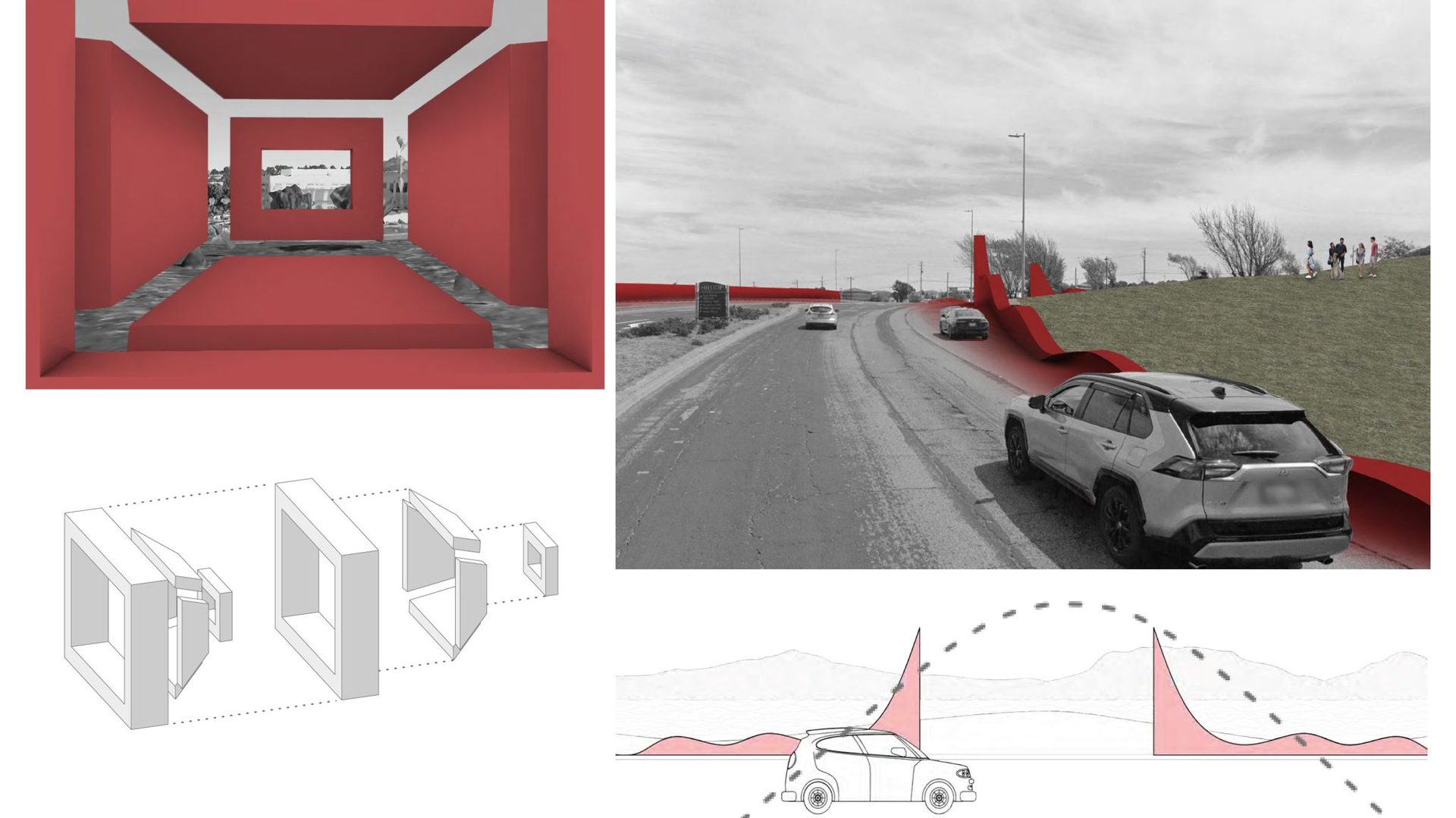
● Signs of the Existing, artistic frames and interventions that highlight the beauty and activity already present but often overlooked, from hidden creeks to community parks.
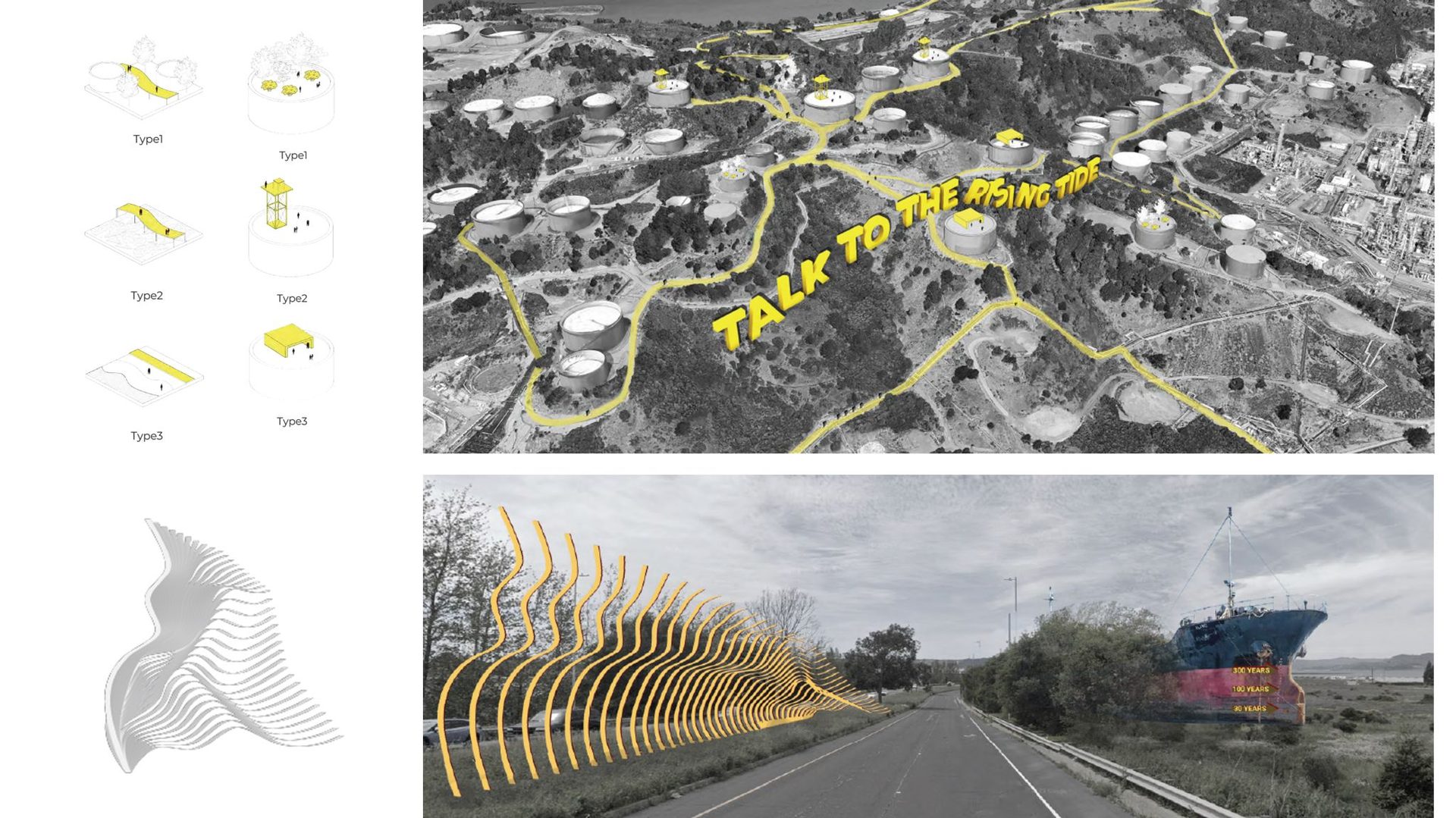
● Signs of the Future, speculative sculptures and landmarks that spark public dialogue about what Richmond could become, addressing sea-level rise and reclaiming industrial land.
● Places of Life, two major anchor destinations that complete the circle between movement and stillness.
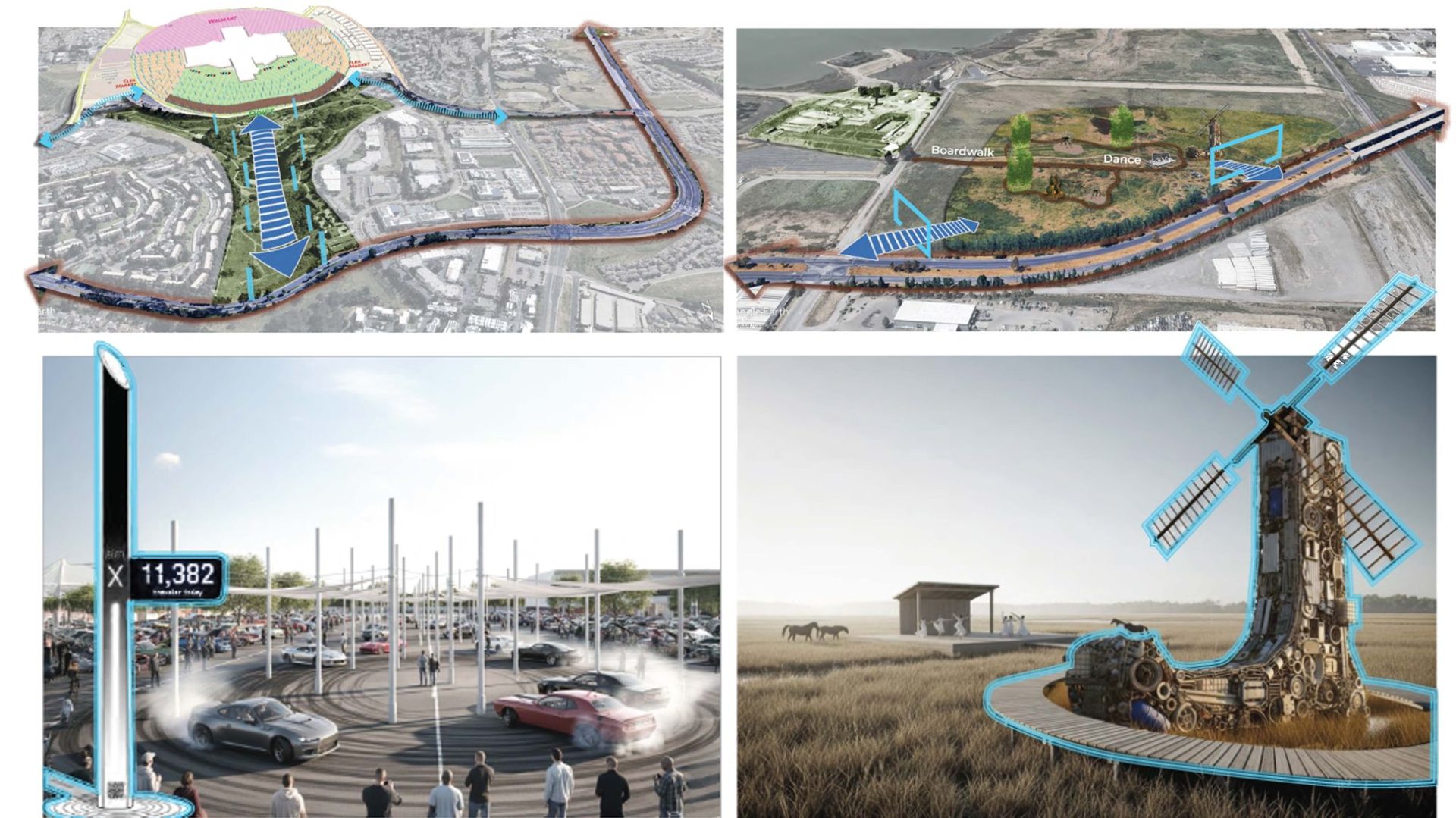
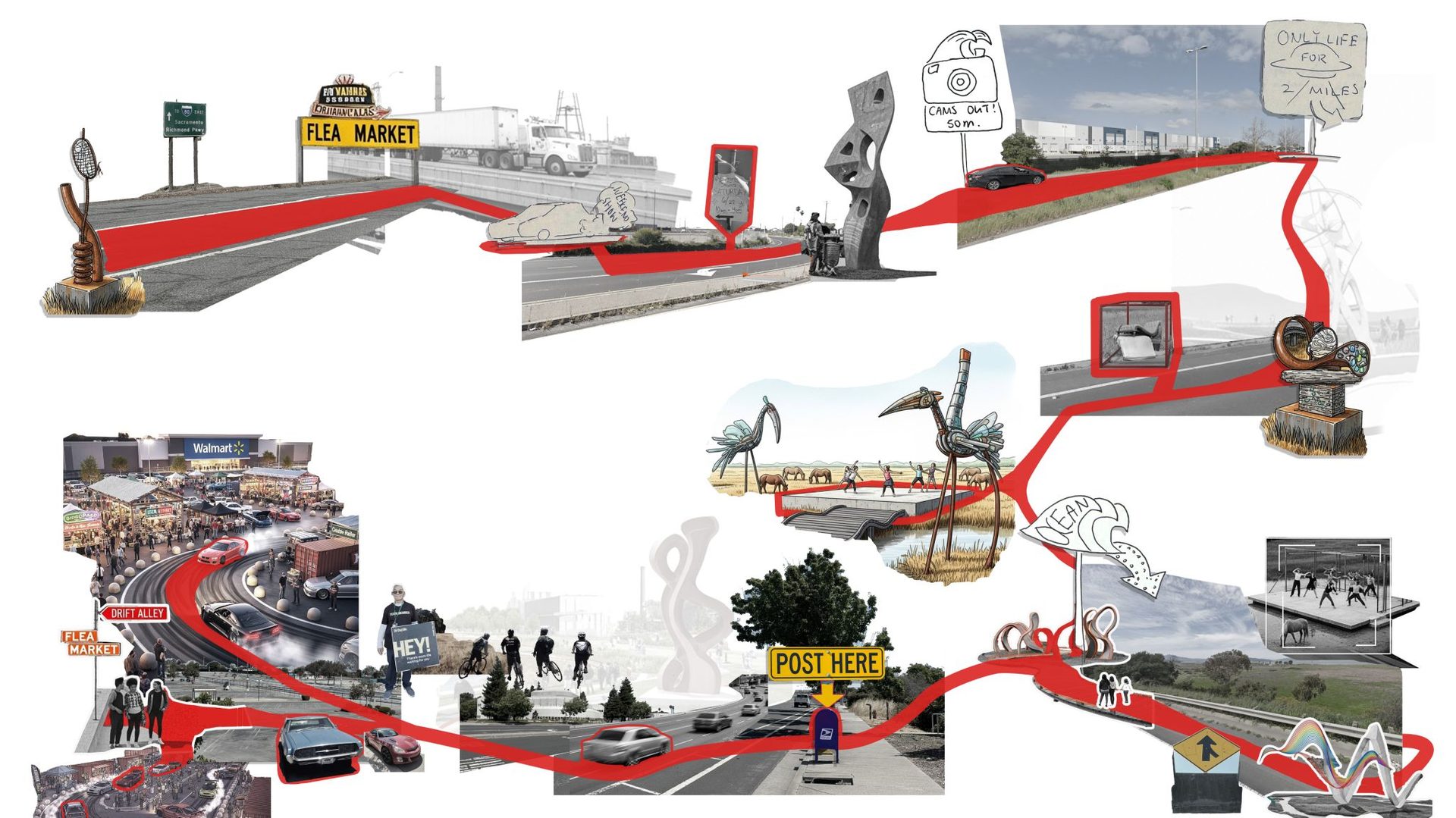
Hilltop, a high-energy “Civic Node,” celebrates Richmond's vibrant car culture with a dynamic driftscape and flea market.
In contrast, The Marsh becomes a “Living Museum” for quiet reflection, community-built sculptures and platforms for dance and meditation. Together they complete the circle between movement and stillness.